Health information Unaccompanied Asylum Seeking Children or Young PeopleIntroduction pack to theChildren In Care Health TeamJune 2023
2Welcome to the United Kingdom (UK)What is the NHS?The NHS stands for the National Health Service. It refers to the government funded medical and health care services that everyone living in the UK can use without being asked to pay the full cost of the service. These services include
- Visiting a doctor or a nurse
at a doctor’s surgery
- Getting help and treatment
at a hospital if you are
unwell or injured
- Seeing a midwife if you are
pregnant
- Getting urgent help from
healthcare professionals
working in the ambulance
services if you have serious
or life threatening injuries or
health problems. This might
include being transported to
hospital. As an unaccompanied asylum seeking child, you are entitled to medical treatment within the NHS. You will be provided with an NHS number which helps to identify you within health services.For further information please access: What is an NHS number (www.
GP: this is a doctor based in the community who treats patients with minor or chronic illnesses and refers those with serious conditions to a hospital. You should see your GP if you are feeling unwell or require any medication.Dentist: you should attend every six months following your first visit. It is important to brush your teeth twice per day with fluoride toothpaste and a good toothbrush for two minutes each time. The dentists in Liverpool currently have waiting lists so you may not have a check straight away. If you are experiencing any pain with your teeth or mouth, please speak with your support worker, social worker or Children in Care specialist nurse.Optician: you should attend every two years following your first visit. The optician will check your eyes to ensure that you do not need glasses and will also assess your eye health.By your 18th birthday, you will be provided with a Health Passport which will detail your birth history, your immunisation history, helpful contacts and your health history. This can be sent to you electronically if you feel this is better for you. As you are a child in care, you will be allocated a Children in Care specialist nurse. All Children in Care have an allocated Nurse. If you are in Year 12 and below you will have a school nurse until you leave school. Your Children in Care specialist nurse will be involved in your health care until you are 18 years old. They work alongside other professionals to ensure that your health needsare being met. They can offer specialist advice around yourhealth and support you in accessing services if required.3
4Initial Health Assessments (IHA)Soon after you have entered care, you will be offered an Initial Health Assessment with a Specialist Doctor at the hospital. This should be completed within 20 days and you will be offered an interpreter. This will take place at Alder Hey Children’s Hospital.You will meet with the doctor or nurse and talk confidentially about your health. They will listen to any concerns you have. Your doctor or nurse will invite you to talk about the experiences you have had in your own country and on your journey to the UK because these events may have affected your health. They may ask about your family and their health. You will be asked about how you are feeling and coping.You will have your height and weight checked and they may check your vision and look at your skin and listen to your heart and lungs. This your health assessment so you decide what you want to talk about and your doctor or nurse will not do anything that you have not agreed to first. But remember that it is a good thing to be healthy and to stay healthy.This health assessment will not in any way affect your claim for asylum in the UK and it is offered for your benefit.Following this, referrals will be made to the Immunology Team at Alder Hey for you to have a Blood Borne Virus (BBV) screening and you may be given a prescription for mebendazole, which is used to treat intestinal worms.
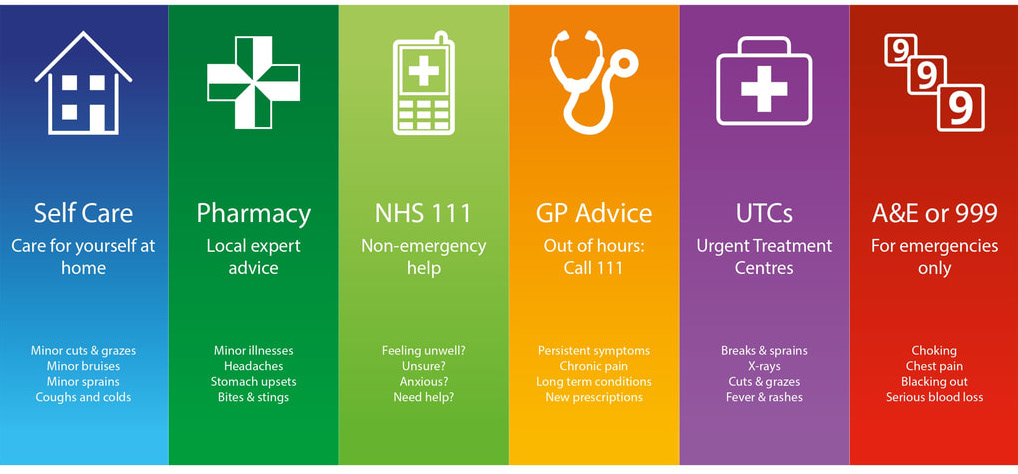
5Your health plan will be shared with your Social Worker, Children in Care specialist nurse and your GP. You will be offered a Review Health Assessment (RHA) 12 months after your IHA. This will be completed by your Children in Care specialist nurse in an environment which is comfortable to you.Please scan the QR code to take you to a video all about your IHA.Services available in the United KingdomThe above is an image with information regarding services that are available within Liverpool. It is important to understand the different places that you can go if you are feeling unwell. You should only call 999 if you are seriously ill or injured, or your life is at risk. In non-life-threatening cases, you can contact 111 for health advice.
6Blood Borne Virus (BBV) and Tuberculous (TB) screeningBlood borne viruses (BBVs) are viruses that some people carry in their blood and can be spread from one person to another. You will be offered a screening for BBVs due to your journey to the United Kingdom. This is because many countries of origin have a higher prevalence of these diseases and you may have travelled across various countries to come here so this puts you at higher risk of these viruses. infected with a BBV may show little or no symptoms of serious disease, but other infected people may be severely ill. You can become infected with a virus whether the person who infects you appears to be ill or not. They may be unaware they are ill as some persistent viral infections do not cause symptoms. An infected person can transmit (spread) blood borne viruses from one person to another by various routes and over a long time period (HSE, 2023).The test will check for
- Human Immunodeficiency
Virus (HIV): HIV is a virus
which causes Acquired
Immunodeficiency Virus
(AIDS), a disease affecting the body’s immune system
- Hepatitis B and Hepatitis C: a disease affecting the liver
- Syphilis: a sexually
transmitted infection.This will be completed at Alder Hey Children’s Hospital and they will take some blood from you for it to be tested.
During this appointment, you will also be tested for TB. This is a bacterial infection that can be spread through breathing in tiny droplets from the coughs and sneezes of an infected person. TB can cause a cough, weight loss, night sweats and high temperatures. There are two types of TB, latent and active. Latent is not contagious and active is very contagious. The tests can be completed either through blood testing or a Mantoux test. A Mantoux test involves injecting a small amount of a substance called PPD tuberculin into the skin of your forearm. This will then be checked by the team in Alder Hey 48 to 72 hours later to see if a small, red, hard lump develops. If you have a strong skin reaction to this, you may need a chest xray to ensure that you don’t have active TB. The treatment for TB is antibiotics. For further information, please visit www.
- Diptheria, tetanus and polio:
also known as the three in
one or the DTP
- Measles, mumps and rubella:
also known as the MMR
- Meningitis ACWY: also
known as the MENACW
- Human Papilloma Virus:
also known as the HPV. This
is routinely given to females
but will also be offered to
males born after September
2006.
To be up to date, you will require three sets of immunisations over the course of 12 weeks. You will be given DTP, MMR and MENACWY at your first appointment; DTP and MMR at your second appointment and DTP at your third appointment. Your first HPV will be given at one of these appointments. You will then require your second HPV 6 to 24 months after your first dose.Immunisations can also be known as vaccines. They are the most effective way to prevent infectious diseases (NHS, 2023). There are misconceptions around immunisations and you can see further information on immunisation safety here: www.
The age of consent in the UK is 16 years old. Sexual activity with any person without informed consent is against the law and can result in a prison sentence for rape or sexual assault, this will also affect your asylum claim. The age of consent is the same for men and women in straight (heterosexual) or same sex relationships (UASC health, 2023). If you choose to have sex, or get into a relationship, please ensure that the other young person you are with is over the age of 16 and that you have their consent.As a teenager, you may decide that you want to have a boyfriend or girlfriend. This is okay and completely natural, but also we understand that some teenagers would prefer to not be in a relationship. We want you to feel happy and safe in a relationship. A healthy relationship is when everyone feels respected, trusted and valued for who they are.9
10A healthy relationship includes:Good communication: You and your partner can talk openly about things without feeling scared of what might happen or being judged for what you’ve saidMutual respect: You listen to each other and respect each other’s boundaries. And nobody does anything to make you feel uncomfortable, scared or humiliatedTrust: You can trust each other without getting jealous, including being able to spend time with other peopleHonesty: Being able to say what you think and feel without censoring yourself or worrying what might happenEquality: Nobody in a relationship should have power over the other person, and it’s never okay for someone to force you to do somethingBeing yourself: You’re able to keep being yourself, doing things you enjoy and spending time with friends and family outside of the relationship.Even when it feels like you need your relationship, it can still be unhealthy or abusive. There might be one thing that makes you question your relationship, or lots of little things. You can access more information on the NSPCC and Childline websites.
11An unhealthy relationship can look like
- Your partner going through
your phone
- Being criticised for how you
look, or having to change
your appearance
- Getting bullied, hurt or hit,
this is always abuse
- Feeling pressure to do sexual
things or send naked
pictures of yourself
- Being stopped from seeing
people, or getting jealous if
you do
- Feeling like you’re not in
control of what you do or
say
- Receiving gifts, but being
made to feel like you need
to do something in return
More information around consent can be found atwww.
12Mental HealthAs an unaccompanied asylum seeking child or young person, you have been subjected to adverse childhood experiences. These can affect your emotional and physical health. You are also more susceptible to post traumatic stress disorder due to your journey and things you may have experienced.Looking after your mental health is so important.Here are some practical ways you can do this:Connect with people, this can help you to build a sense of belonging and self worth, to give you an opportunity to share positive experiences and to provide emotional support and allow you to support others. You can do this by spending time your friends and family, volunteering, playing games with friends and family. Using technology can help too if people are not close by, but don’t rely on technology alone.Be physically active, it can help raise your self esteem, help you to set goals or challenges and achieve them, it causes a chemical change in your brain to help positively change your mood (this is the Endorphins we spoke about earlier).Learn new skills, this can help in boosting your self confidence and raising self esteem, help you to build a sense of purpose and help you to connect with others. You can learn loads of new things, such as learning to cook, trying a DIY project, signing up for new courses, or trying a new hobby such as a new sport or learning to paint.
13Give to others, this helps to create positive feelings and a sense of reward, helps in giving you a feeling of purpose and self-worth and helps you to connect with other people. You can do little things such as saying thank you to someone for something they’ve done, spending time with people who need support, offering help to others and volunteering in your community.Pay attention to the present moment (mindfulness), paying more attention to the present moment can improve your mental wellbeing. This includes your thoughts and feelings, your body and the world around you.If you ever feel like you’re struggling with your mental health, you need to speak to someone you trust and to seek support from your GP, Children in Care specialist nurse, social worker or support worker who will be able to talk to you about what help you can get.Young Person’s Advisory Service: www.
14Drugs, smoking and AlcoholThe age to legally consume alcohol in the UK is 18 years old.Know the risks:Drinking alcohol can damage a child’s health, even if they’re 15 or older. It can affect the normal development of vital organs and functions, including the brain, liver, bones and hormones.Drinking at an early age is also associated with risky behaviour, such as violence, having more sexual partners, pregnancy, using drugs, employment problems and drink driving.If you are drinking alcohol, it is important you know your limits and what to do if you feel too drunk. You should make an adult aware that you’re drinking and alcohol and where you are. You should always call 999 if you feel unsafe or suspect you have alcohol poisoning or you or someone you’re with is dangerously intoxicated.If you have alcohol poisoning it can affect your balance and speech, as well as the nerves that control breathing and heartbeat. It can stop your gag reflex from working, putting you at serious risk of choking to death, especially if you vomit. Expansion of blood vessels near the skin caused by alcohol, lack of perception of danger and falling asleep without adequate protection in cold weather can all lower body temperature, leading to hypothermia. Knowing basic first aid is always a good idea.
15The use of drugs in the UK is illegal at any age. There are several risks associated with taking drugs such as:
- Liver, kidney and heart
problems
- Increased risk of mental
health problems
- Financial implications
- Damages relationships with
others
- Your safety and others is
reduced and you’re more
likely to make poor
decisions. For more information you can visit www.
Our patients matterMersey Care NHS Foundation Trust listens and responds to patients and their carers to help improve the services we deliver. If you have any comments, compliments or concerns you can speak with a member of staff or contact our Patient Advice and Liaison Service (PALS) and Complaints Team.Phone: 01514712377 Freephone: 0800 328 2941Email: palsandcomplaints